
New Lenox, IL · Garage Door Service
Detached vs Attached Garage Doors in New Lenox
How a detached garage door differs from an attached one in New Lenox, tied to this area's 1960s-70s housing stock and cold-moderate climate band.
- Repairs & new doors
- Springs & openers
- Serving 6 nearby communities
What to Look At First
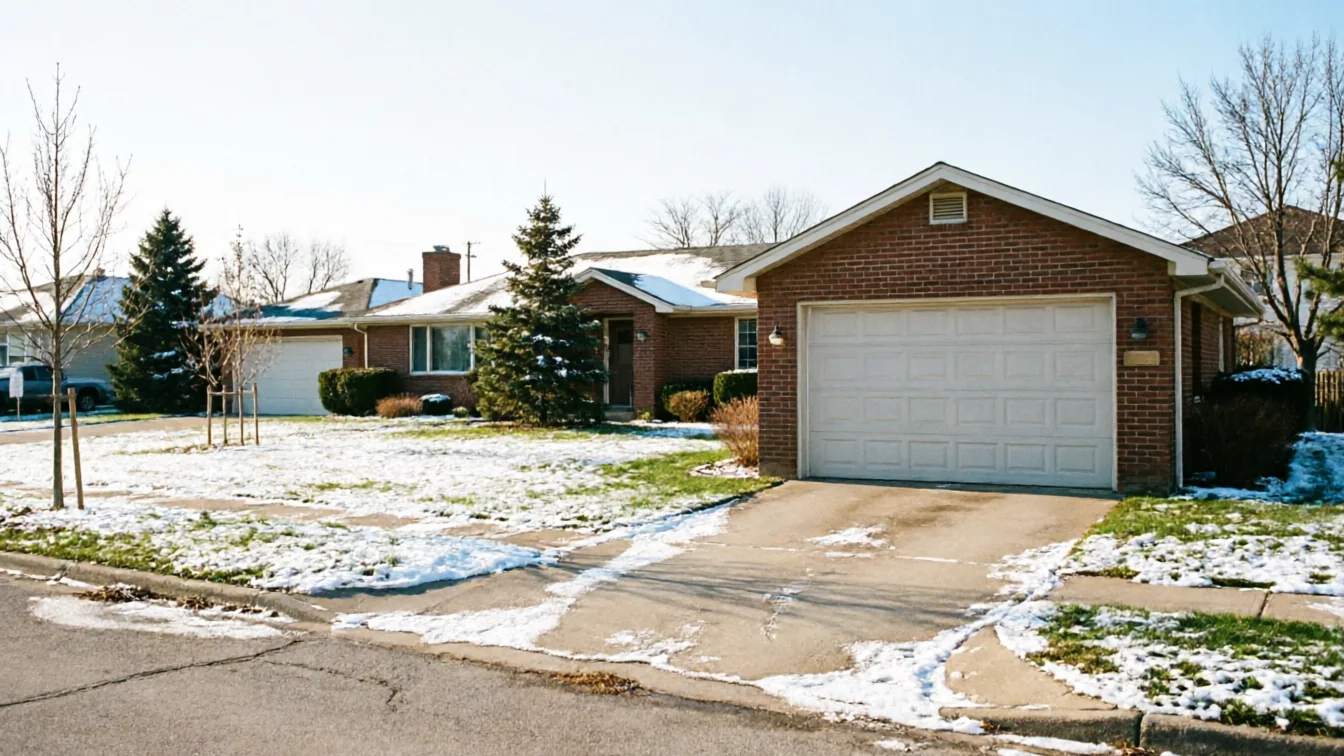
Before you worry about the door itself, figure out what kind of garage you actually have. Across New Lenox and the 61 named areas nearby, most houses went up between 1955 and 2004, with the bulk of that stock dating to the 1960s and 70s. On a lot that age, the attached garage is usually original to the house - same roofline, same year, same framing crew. The detached garage, when there is one, is often a second build: added later, sometimes with a shorter header, sometimes with hardware that doesn't match anything on the house.
Walk the structure and note three things: whether the garage shares a wall with heated living space, whether the ceiling is insulated, and whether the opener has its own dedicated circuit or is running off an extension cord from the house. Those answers tell you more about what kind of door problems you'll see than the brand plate on the panel ever will. A detached garage on a property near Mokena or Frankfort built in that same 1970s wave often has a shorter, lower opening than code calls for today - worth measuring before you order a replacement door.
The Problem
An attached garage door lives next to a heated room. Even with no insulation in the garage itself, some warmth bleeds through the shared wall, and that keeps hinges, rollers, and the spring from seeing the full swing of an outdoor winter. A detached garage gets none of that. It sits out on its own, exposed on all four sides, and the door on it rides the full temperature range of whatever the day throws at it.
That matters because the doors on a lot of these detached structures are the same age as the house - built in that 1960s-70s window - and were never spec'd for the kind of swing they're getting now. Torsion springs lose tension faster with repeated cold-to-warm cycling than with steady cold. Tracks on a detached garage also pick up more condensation, since there's no ambient heat drying them out overnight, and that condensation is what turns a squeaky roller into a rusted one. The fix isn't the same on both buildings, and treating them the same is how people end up replacing a spring twice in two winters.
How Local Conditions Play In
New Lenox sits in a cold-moderate climate band, not the deep-freeze end of the Midwest, but cold enough that an unheated detached garage runs noticeably colder than the attached one twenty feet away. That gap is the whole story here. A door on a detached structure built alongside a 1970s ranch has been riding temperature swings for decades with no buffer, while its attached counterpart on the same street has had the house's own heat working in its favor the entire time.
With 153,879 owner-occupied houses across this service area and a housing stock centered on 1976, the pattern repeats block after block: attached door hardware holding up better, detached door hardware showing wear first, especially springs and bottom seals. The seal on a detached garage door takes the brunt of ground-level cold and moisture with nothing to temper it, and it's usually the first part to fail. If you're only going to budget for one upgrade this year, the seal and weatherstripping on the detached building is where the cold-moderate climate actually does its damage.
What It Costs
We don't have a price list to hand you here, and giving you one without seeing the actual door, opener, and framing would be guessing - which isn't something we do on a customer's garage. What we can tell you is what drives the number up or down between these two setups.
A detached garage job often costs more than the same repair on an attached structure, not because the door is different, but because the wiring, framing, and header heights on these older outbuildings don't match current code or current door sizing. If the opener on a detached garage is still running off an extension cord instead of a dedicated circuit, that's a separate fix before the door work even starts. Attached garages built as part of the original 1960s-70s house tend to have standard rough openings, which keeps replacement straightforward.
The honest limitation: we can't quote a number without being on site. Anyone who gives you a firm price over the phone for a detached garage door, sight unseen, is guessing harder than we are.
Frequently asked questions
Is a detached garage door repair different from an attached one?
The door hardware itself is usually the same. What differs is exposure - a detached garage in New Lenox has no shared wall with heated space, so springs, tracks, and seals take the full swing of outdoor temperature. That means detached garage doors tend to need weatherstripping and spring attention sooner than attached ones on the same property.
Why does my detached garage door freeze up more than the one on the house?
No shared wall means no ambient heat bleeding in. In this cold-moderate climate band, a detached structure sits at outdoor temperature most of the winter, and condensation on tracks and hinges has nothing to dry it out overnight. That's the main reason detached doors ice up or stiffen before attached ones do.
My detached garage is older than the house - is that normal here?
It's common. A lot of New Lenox-area properties built in the 1960s and 70s had the detached garage added separately from the main build, sometimes years later. That means different header heights, different framing, and occasionally an opening that doesn't match current standard door sizes.
Related garage door services in New Lenox
More garage door guides
Book garage door service in New Lenox
Call now or request a quote - tell us what the door is doing and where you are.