
New Lenox, IL · Garage Door Service
Panel Replacement for New Lenox Garage Doors
Dented or rusted panel on a 1970s-era garage door in New Lenox? See what panel replacement actually involves, what it costs you in time, and why this area sees it so often.
- Repairs & new doors
- Springs & openers
- Serving 6 nearby communities
Can You Do This Yourself
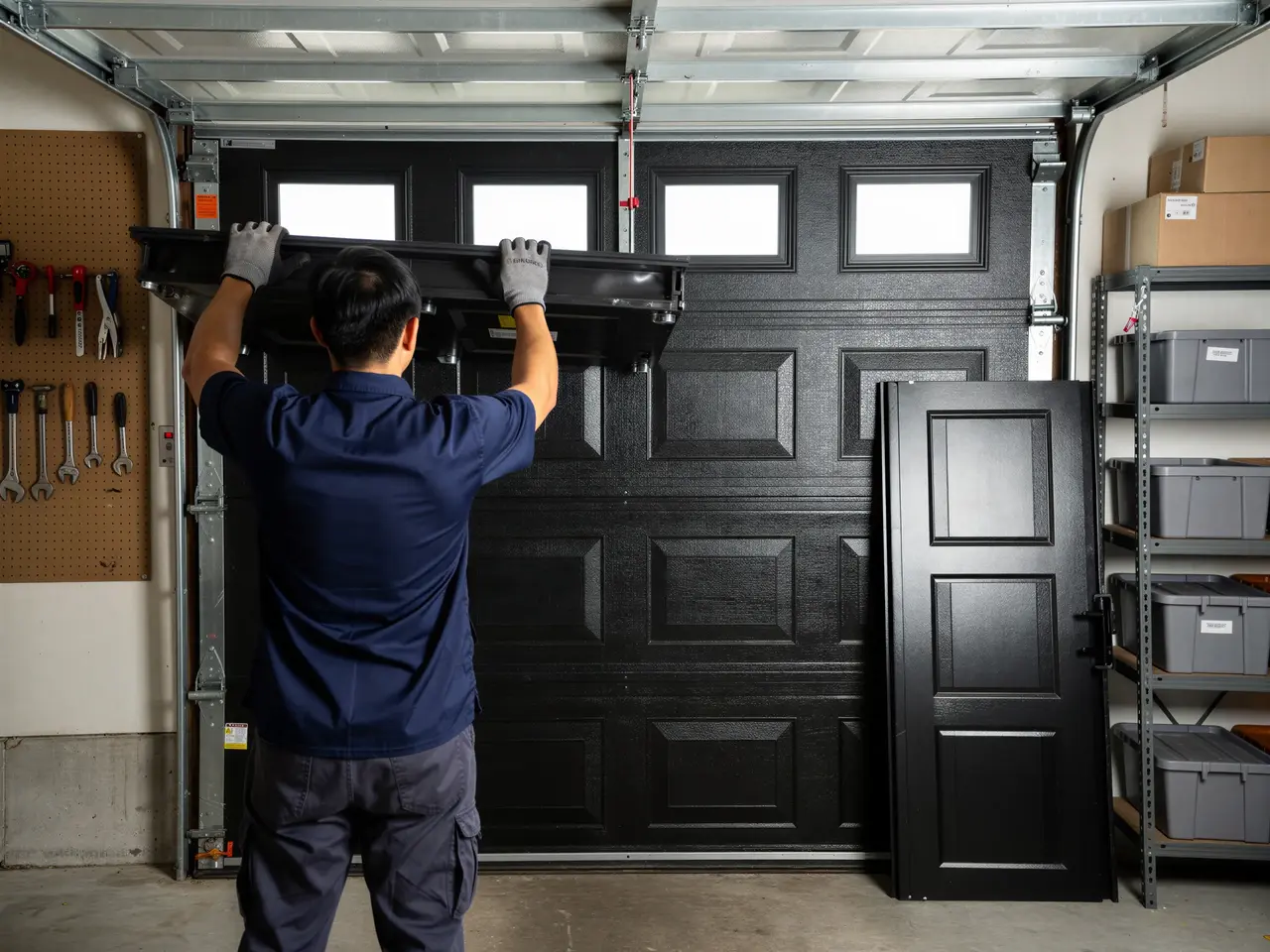
A single panel on a sectional door can be unbolted and swapped without touching the opener or the spring system, so it's not unreasonable for a handy homeowner to try. The catch is matching. Panel profiles, rib patterns, and window cutouts changed by manufacturer and by decade, and a lot of the housing stock in this service area dates back to the 1960s through the 1980s, so the exact panel your door shipped with may not be made anymore. You can end up with a new section that's close but visibly off in color, bead pattern, or gauge thickness. We'll say plainly: if your door is a steel sectional from that era and only one panel is damaged, there's a real chance we can't get a true match either, and the honest answer is a full door replacement instead of chasing a part that doesn't exist. We'll tell you that before we order anything, not after. If your door is newer and the manufacturer still stocks that line, a single-panel swap is a legitimate repair and worth trying before you replace the whole door.
How Long It Takes
The physical swap - removing the hinges, lifting out the damaged section, setting the new one, re-hanging the track rollers - is the fast part of this job. What actually sets the timeline is sourcing. If your door is a common builder-grade model, a matching panel can sometimes be found quickly. If it's an older design, a discontinued color, or a width that isn't standard anymore, we're ordering from a supplier and waiting on them, not on us. Across the households we work with in this area, median housing is a half century old, which means a meaningful share of the doors we're asked to match are past the point where the original manufacturer still carries that panel line. We won't give you a number that isn't accurate for your door - we'll tell you once we've identified the make and model whether it's a quick turnaround or a wait. Either way, the door stays operational on the remaining good panels while you wait, as long as the track and spring aren't compromised.
What You Are Seeing
A panel failure usually shows up as one of three things: a visible dent or crease from an impact, a section that's bowed or bulging outward along its horizontal ribs, or rust-through along the bottom edge where water sits after snowmelt. Sometimes it's cosmetic only - the door still opens and closes fine, the panel just looks bad. Other times the dent has knocked a stile out of true, and now the section binds against the track or won't seat flush against its neighbor, which puts uneven strain on the rollers and hinges nearby. If you're hearing a new scrape or pop at one spot on the door as it travels, that's usually the damaged panel dragging, not the opener. Worth noting: a cracked or split panel on an older steel door is sometimes a sign the steel itself has thinned from years of rust working from the inside out, in which case a patch repair won't hold and the panel will fail again nearby within a season or two.
What Causes It Around Here
Most of the garage doors we're called out to in this service area were installed somewhere between the mid-1950s and the early 2000s, with the bulk of that stock going up in the 1960s and 70s. Steel sectional doors from that period weren't finished with the corrosion coatings that are standard now, so decades of this region's cold-climate freeze-thaw cycle - road salt spray, melting snow sitting against the bottom panel, ice forming in the seams - eats through the galvanizing from the inside before it ever shows on the surface. By the time you see a bubble or a rust spot, the steel underneath is usually already thinner than it looks. Add in the ordinary stuff - a backed-up car, a bike, an errant basketball - and an older panel that's already compromised by rust takes damage that a newer, better-coated panel would shrug off. That combination, old housing stock plus a real winter, is why panel failure shows up more here than in places with newer builds or milder weather.
Frequently asked questions
Will a new panel match the rest of my door exactly?
Sometimes, but not always. If your door is a current model from an active manufacturer, yes. If it's an older steel sectional, common in homes built here between the 1960s and 80s, the original panel line may be discontinued, and the closest match can differ slightly in color or rib pattern. We check availability before we quote the job.
Is panel replacement cheaper than replacing the whole door?
Usually, if only one or two panels are damaged and the rest of the door and hardware are sound. It stops being worth it once rust has spread to multiple panels or the track and springs are also near the end of their life - at that point you're paying for a repair that won't outlast the rest of the door by much.
Why does my garage door panel keep rusting at the bottom?
Cold-climate winters mean salt spray and melting snow sit against the bottom edge of the door for months at a time. On older steel doors without modern corrosion coating, that moisture works through the galvanizing from behind, so rust often shows up well before the panel looks obviously bad from outside.
Related services
Book garage door service in New Lenox
Call now or request a quote - tell us what the door is doing and where you are.