
New Lenox, IL · Garage Door Service
Panel Replacement for Manhattan's Newer Garage Doors
Manhattan homes mostly went up after 2000, which means factory-finish steel doors and tighter panel-match rules. We bring the right stock from New Lenox, 6 miles out.
- Repairs & new doors
- Springs & openers
- Serving 6 nearby communities
What Causes It Around Here
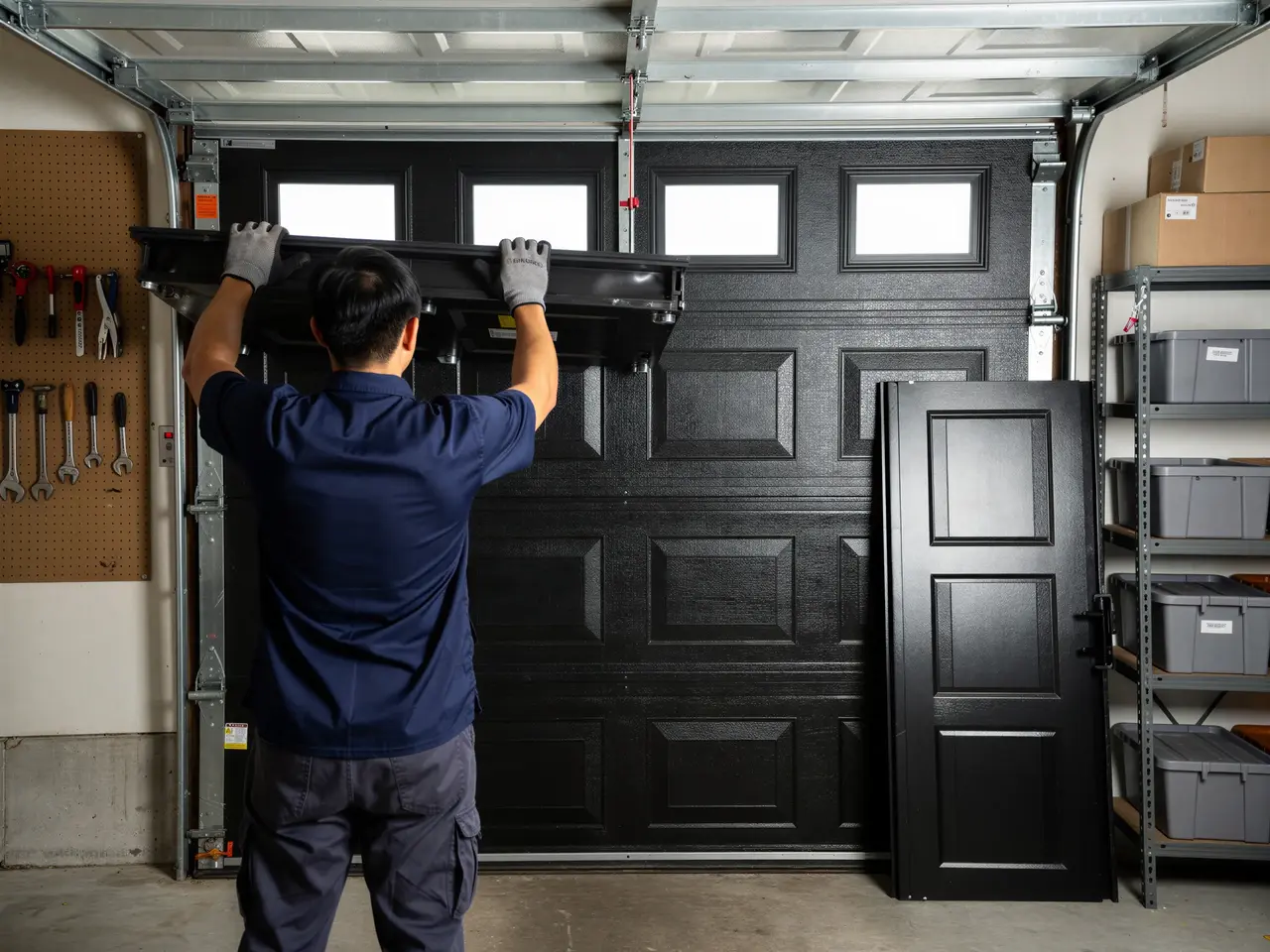
Most of Manhattan went up well after 2000, with a lot of the housing stock dating from the early 2000s on - newer than the 1976 median you'd find across the wider New Lenox service area. That matters for panel work because builders in that era almost universally spec'd factory-painted steel sectional doors in a handful of standard colors, usually matched tight to the siding and trim package the subdivision used. A dent or crease on one of these doors isn't a structural problem most of the time - it's a color and profile matching problem. The embossed wood-grain texture on a 2002 door doesn't look like the smooth-coat texture on a 2008 door, even from the same manufacturer, and builder-grade doors get discontinued and re-run on a cycle that has nothing to do with how long your house has stood. The region sits in a cold-moderate climate band, so panels here also carry more insulation backing than you'd see in warmer markets, which adds a step to matching thickness as well as color when you're swapping one section instead of the whole door.
We see the same handful of builder door lines repeat across Manhattan's newer subdivisions, which helps - but it also means a panel that matches perfectly on one block can be a half-shade off three streets over if that house went up two building seasons later.
Booking a Visit
We run out of New Lenox and Manhattan is about 6 miles down the road, so a panel job here goes on the same truck route as everything else close in. When you call, tell us the door's approximate age and, if you can, the brand or a photo of the label inside the top section - on a 2000s-era build that label is usually still legible, which saves a trip just to identify the panel profile before we can quote the swap.
We don't keep a branch or drop-off counter in Manhattan itself - this is a New Lenox-based crew that comes to you, so the visit is scheduled, not walk-in.
Stocked Parts
We carry common builder-grade steel panel sections and the standard hardware that goes with them - hinges, end stiles, rollers sized for the lighter builder doors common in homes built in the 2000s. What we can't promise off the truck is an exact color and texture match for every discontinued run. Builder doors get re-specified by the manufacturer every few years, and a 2003 colorway isn't guaranteed to still be in production. When that happens, the honest options are: replace the single panel with a close-enough match and accept a visible seam, or replace all the panels on that face of the door so the color reads as one piece. We'll tell you straight which one your situation calls for rather than quote the cheap fix and let you find out later.
What You Are Seeing
On a door from this era, panel damage usually shows as a clean dent or crease across one section - a car bumper, a basketball, a ladder leaned wrong - rather than rust-through or warping, since the steel hasn't had decades to corrode. If the bottom panel is the one that's hit, check the weatherstrip channel too; builder-grade bottom sections often use a thinner retainer that bends along with the panel and needs replacing as a set, not just straightened back into shape. A door that won't seal tight at the bottom on a cold morning, even after the dent looks cosmetic, is telling you the track alignment shifted when the panel took the hit - that's worth a look before you just order the replacement panel and call it done.
Where This Job Goes Sideways
The job gets complicated when the damaged panel sits in the middle of the door instead of top or bottom - pulling a middle section means disconnecting more hardware and reseating the whole stack, and on a double-wide door that's more labor than most homeowners expect for what looked like a one-panel fix. It also goes sideways when the house is near the older edge of Manhattan's build range - a house from right around 2000 can still be running an early version of a door line that's since been redesigned twice, and at that point a single-panel match isn't realistic no matter how much stock we're carrying. We'll always tell you when full door replacement is the straighter path instead of chasing a panel that doesn't exist anymore - a mismatched patch on an otherwise good door isn't a fix anyone should pay for twice.
Frequently asked questions
Will a replacement panel match my door's color exactly?
On builder-grade doors from the early 2000s, often yes if the color run is still in production - but these doors get re-specified every few seasons, so an exact match isn't guaranteed. We check the label inside the top section first and tell you honestly whether it's a clean match or a full-face replacement situation.
Do you have a shop in Manhattan?
No. We're based in New Lenox, about 6 miles away, and we schedule Manhattan panel jobs on the same route as our other nearby service calls. There's no local counter or drop-off point here, just a truck that comes to you on an appointment.
My house is newer - why is the bottom panel already denting?
Age isn't the main factor on builder-grade steel doors; impact is. These sections are lighter-gauge than older doors, which keeps cost down for the builder, but it also means a bumped car or a thrown ball leaves a mark more easily than it would on heavier older stock.
Can you just fix the dent instead of replacing the panel?
On steel sectional doors we generally don't recommend pulling dents back out - the factory finish cracks and the insulation backing can separate, so the repair looks worse over time than a clean panel swap. Replacing the section is usually the more durable call.
More garage door services in Manhattan
Book garage door service in New Lenox
Call now or request a quote - tell us what the door is doing and where you are.