
New Lenox, IL · Garage Door Service
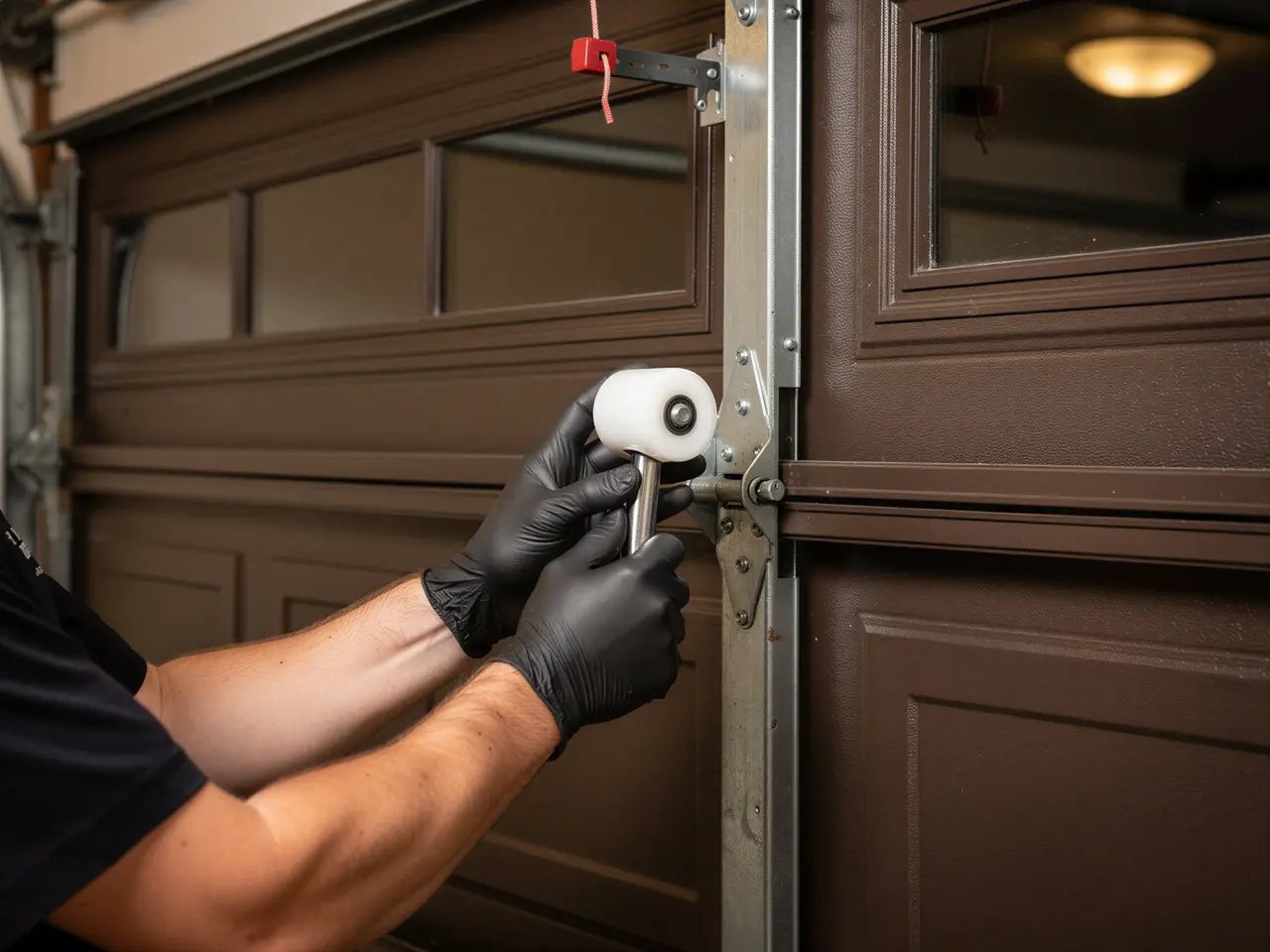
Roller Replacement for Manhattan's Newer Garage Doors
Manhattan, IL homes are mostly 2004-era builds with factory rollers now wearing out. We run the 6-mile drive from New Lenox with stocked steel and nylon rollers on the truck.
- Repairs & new doors
- Springs & openers
- Serving 6 nearby communities
What Causes It Around Here
The drive from our New Lenox shop to Manhattan is about six miles, which matters more than it sounds like for a roller job. It's short enough that we're not guessing what's on the truck before we leave - we load for what Manhattan actually needs, not a mixed bag for older housing stock.
And what Manhattan needs is different from a lot of the area. The median year built here is 2004, which puts most doors on original builder-grade rollers rather than the steel rollers on side-mounted torsion hardware you'd find on a house from the 1970s. Those factory rollers are usually plastic or light nylon with a stamped stem, sized to last 10 to 15 years of normal cycles. Two decades in, that's exactly the wear window - cracked roller wheels, flat spots that thump on the way up, or a stem that's worn loose enough to let the roller walk out of the track.
It's not rust and pitting like you'd see on a 1970s steel roller in this climate band's freeze-thaw cycle. It's plastic fatigue. Different failure, different fix, and it's why we don't bring the same roller kit to every call in the service area.
Booking a Visit
We cover Manhattan from New Lenox, six miles out, so a roller call here isn't a special trip - it's a normal part of the route. When you call, tell us the door's rough age if you know it; for a 2004-era build, that's usually enough for us to guess which roller type is worn out before the truck leaves.
We don't keep a branch or a counter in Manhattan itself. The job starts and ends from New Lenox, and the parts come with us. If you've got a two-story garage or a door that's been modified from its original setup, mention that too - it changes the roller count and sometimes the bracket style we bring.
Stocked Parts
For the roller stem and wheel sizes common on 2004-era builder doors, we carry nylon rollers with sealed bearings as the standard swap - quieter than the OEM plastic wheel and built for the same stem length, so no bracket work is usually needed. We also carry steel ball-bearing rollers for owners who want a heavier-duty part on a door that gets used daily, which is common on houses with household incomes in this range that tend to run two vehicles through the garage.
One honest limit: if your track itself is bent or the roller has already jumped and scored the inside of the rail, a roller swap alone won't fix it. We'll tell you that on site rather than sell you a part that won't solve the noise.
What You Are Seeing
A worn roller on a door this age usually sounds like a soft thump or a repeated clunk at the same spot in the travel, not grinding. That repeating pattern is the tell - a flat-spotted wheel hits the same point in the track every single cycle. Grinding or a metal-on-metal screech is more often a dry bearing or a roller that's cracked enough to let the stem rub the bracket directly.
If the door hesitates or jerks right at the top or bottom of travel, check whether it's a roller near the end of the track rather than the spring - rollers near the top curve wear faster because of the tighter radius. On a 2004-built door, that curve roller is often the first one to fail.
Where This Job Goes Sideways
The job gets harder when a homeowner assumes it's just the roller and it's actually the track that's been bent by that failing roller banging against it for months. We see this more on doors that have been making noise and getting ignored rather than fixed early - by the time we're there, the track needs straightening or replacing, not just a roller swap.
It also goes sideways if someone's tried a universal roller kit from a hardware store first. Those are often a different stem length than what came on a 2004-era builder door, and forcing one in can crack a bracket. At that point the small roller job turns into a bracket repair too. We'd rather quote the right part the first time than patch a mismatch.
Frequently asked questions
Why does my garage door roller wear out faster than I expected on a newer house?
Most Manhattan homes were built around 2004 with builder-grade plastic or nylon rollers, not heavier steel ones. Those factory rollers are rated for roughly 10 to 15 years of normal cycling, so a 20-year-old door is right in the window where cracked wheels and worn stems show up as noise and hesitation.
Do you have a branch in Manhattan?
No. We run roller jobs in Manhattan from our New Lenox location, about six miles away. The drive is short enough that we carry the right roller stock for this town's newer housing on the truck before we leave.
Can you just replace the rollers without touching the track?
Usually, yes, if the track is straight. But if a cracked roller has been banging against the rail for a while, the track itself can bend, and a roller swap alone won't quiet that. We check the track on site before quoting the job.
What roller type do you recommend for a daily-use garage door?
For houses running two vehicles through the garage regularly, we usually suggest steel ball-bearing rollers over nylon. They cost a bit more but hold up better under frequent cycling than the plastic rollers most builder-grade doors shipped with.
More garage door services in Manhattan
Book garage door service in New Lenox
Call now or request a quote - tell us what the door is doing and where you are.