
New Lenox, IL · Garage Door Service
Why Your Safety Sensors Keep Drifting in New Lenox
New Lenox homes mostly built 1955-2004 have slab-mounted sensor brackets that drift with freeze-thaw and settling. Here's what to check before calling.
- Repairs & new doors
- Springs & openers
- Serving 6 nearby communities
What to Look At First
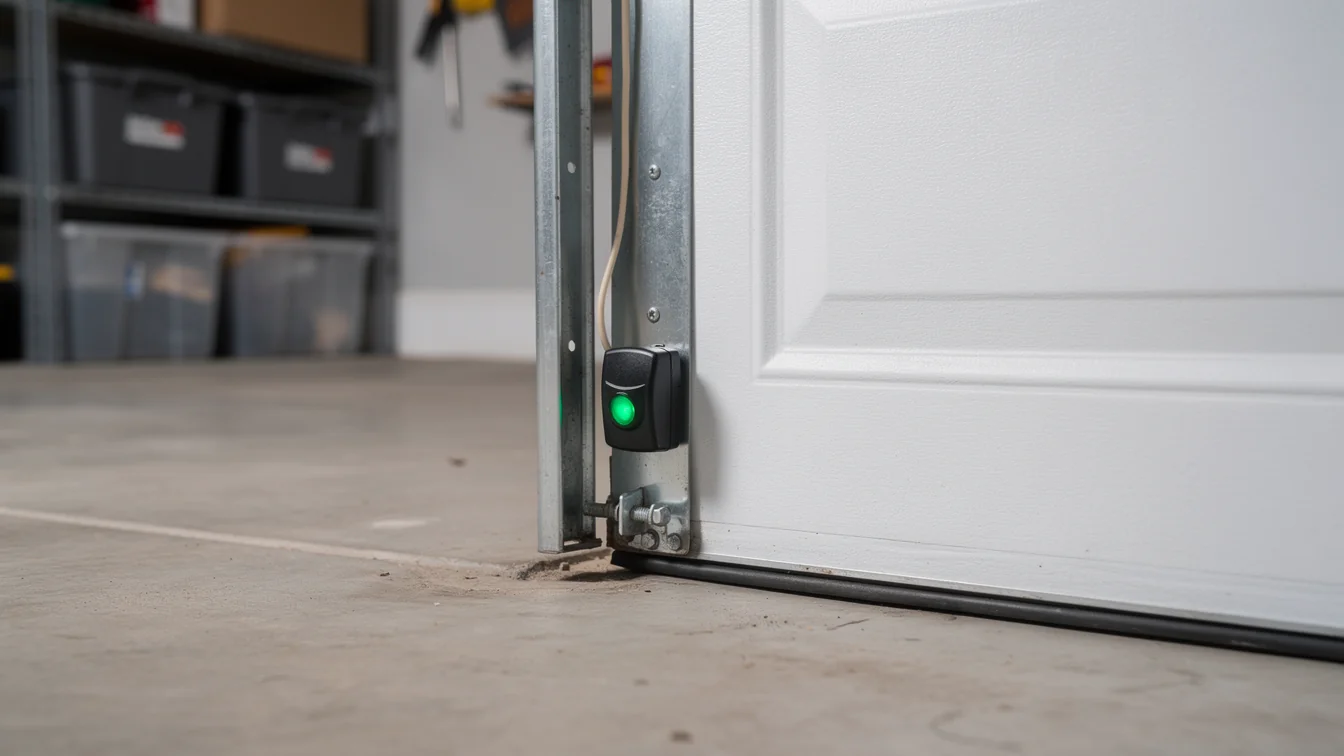
Before you assume the sensor itself is bad, look at the bracket it's bolted to. Most New Lenox houses date from 1955 to 2004, with the bulk of that stock going up in the 1960s and 70s, and the sensor brackets on these doors are usually the original mounts - a small L-shaped piece of steel lagged straight into the slab or the wood jamb next to it. That bracket doesn't move with the door. It moves with the house.
Check the LED on each eye. A solid light means it's getting power and aligned; a blinking light usually means the beam is broken or the eye has rotated even slightly off center. Run your hand along the bracket and see if it wiggles at the bolt. On a lot of these older installs, the wood jamb behind the bracket has shrunk over the decades, so the screw sits in a slightly bigger hole than it used to, and the whole bracket rocks a few degrees every time the door vibrates past it.
If both eyes light up solid and the door still won't close, the problem probably isn't alignment at all - check the wiring where it runs along the track, since that's often where it frays first on original installs.
The Problem
Sensor drift on houses from this era almost always comes back to the same thing: a bracket built for a slab and a jamb that have since moved. Slabs poured in the 1960s and 70s settle unevenly over fifty-plus years, and even a quarter-inch of shift at one corner is enough to rotate the sensor eye off its mate on the other side of the door. You don't see the slab move. You just see the light start blinking again every few months.
The other common culprit is the bracket screws themselves backing out of old wood framing that's dried and shrunk since it was installed. A screw that held tight in 1976 lumber doesn't always hold the same way in that same board fifty years later. Vibration from the opener running past it, day after day, works the screw loose a hair at a time.
One honest limit here: if the bracket mount itself has rotted or the jamb is no longer square, re-tightening the same screw into the same hole won't hold for long. At that point the fix is a new bracket position, not another round of re-aiming the eyes.
How Local Conditions Play In
New Lenox sits in a cold-moderate climate band, and that matters more for sensors than people expect. The freeze-thaw cycle each winter heaves the ground at the slab edge, and the sensor bracket anchored there moves with it - a little in December, a little more in February, and by the time the thaw sets in, the eye that was dead-on in October is pointed a few degrees off.
That cycle repeats every year on houses built in that 1955-2004 window, which covers most of what's around here. It's also why a sensor that aligned fine on the last service call can be back out of true a season later with nothing else having changed. The bracket isn't broken. The ground under it moved and moved back, not quite the same way twice.
Cold weather also makes the plastic sensor housings more brittle, so a bracket that's already loose and rattling in a cold snap is more likely to crack the housing than one that's warm and slightly flexible. That's worth knowing before you grab a screwdriver and crank the mounting screw down hard in January.
What It Costs
We don't have a flat number to put here, because what a sensor call runs depends entirely on what's actually wrong - a loose bracket screw is a different job than a cracked housing, which is a different job than wiring that's frayed where it runs along an old track. We're not going to quote a price before we've looked at the bracket and the mount it's sitting in.
What we can tell you is what drives the cost up or down. If it's just re-aiming and re-tightening an original bracket, that's quick. If the jamb wood behind it has shrunk enough that the screw won't bite anymore, or the slab has settled enough that the bracket needs to be remounted in a new spot, that's more work and sometimes a new bracket altogether. Across the owner-occupied houses in this area, a lot of which share that same 1955-2004 build window, we see both ends of that range regularly.
The honest answer is: have someone look at the actual bracket and wiring before you budget for it. Guessing a price over the phone on a sensor call usually guesses wrong in one direction or the other.
Frequently asked questions
Why does my sensor light keep blinking only in winter?
That's almost always freeze-thaw movement at the slab edge where the bracket is anchored. New Lenox sits in a cold-moderate climate band, so the ground under the bracket shifts a little each winter and settles back differently in spring. The bracket itself usually isn't broken, it's just been nudged off true by the ground moving under it.
Can I just re-aim the sensor myself?
Often, yes, if the bracket is solid and the screw still bites. Loosen the wing nut or screw, nudge the eye until the LED goes solid, and retighten. If the bracket wobbles at the mounting point or the screw won't hold in the jamb, re-aiming will only last a few weeks before it drifts again.
My house was built in the 1970s. Does that matter for this?
It does. A lot of New Lenox housing dates from that 1960s-70s stretch, and original sensor brackets from that era are often mounted into wood jambs or slab edges that have shrunk or settled over the decades. That's the root cause behind most drift calls we see on houses from that build period.
Related garage door services in New Lenox
More garage door guides
Book garage door service in New Lenox
Call now or request a quote - tell us what the door is doing and where you are.