
New Lenox, IL · Garage Door Service
Why Your New Lenox Garage Door Lets the Cold In
How New Lenox's 1960s-70s housing stock and cold-moderate climate turn worn garage door seals into real draft and energy problems, and what actually fixes it.
- Repairs & new doors
- Springs & openers
- Serving 6 nearby communities
What to Look At First
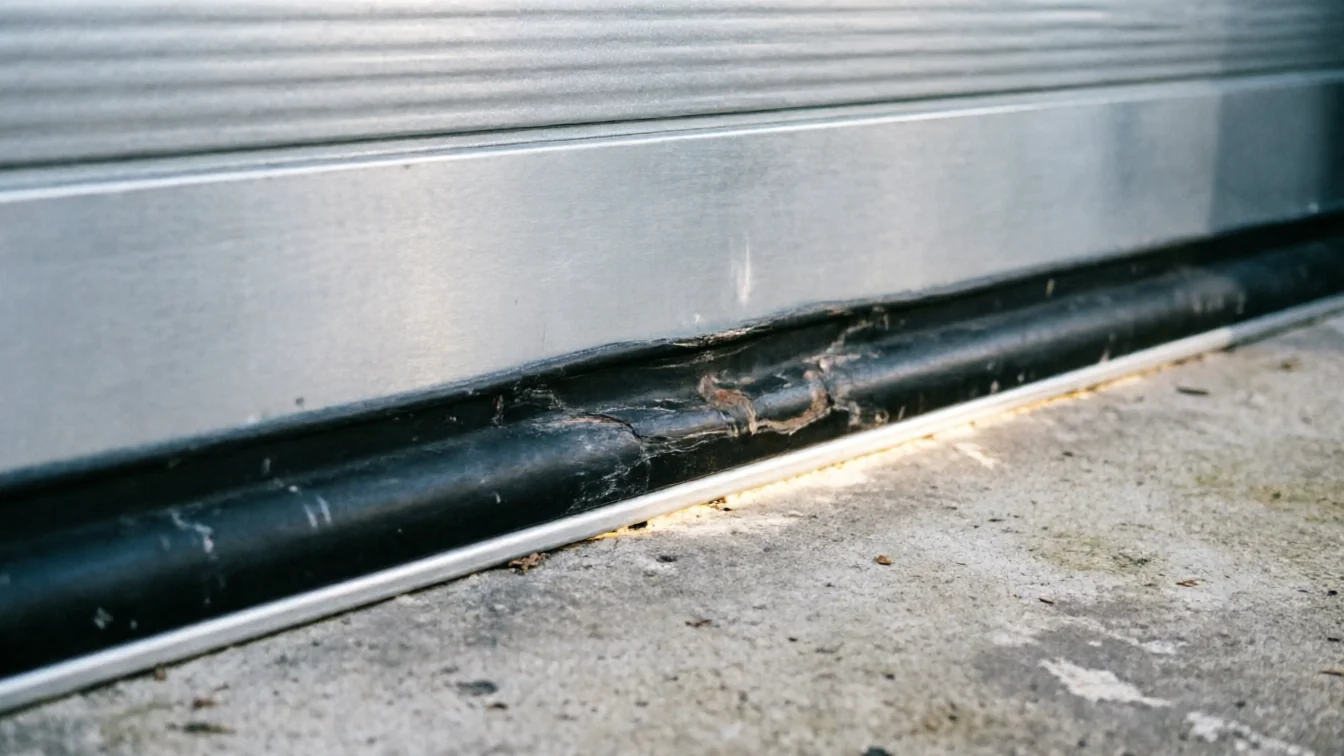
Start at the bottom. Most houses on this side of New Lenox were built between 1955 and 2004, with a heavy concentration around 1976, so the bottom seal on your door is very likely the original vinyl or a cheap replacement strip put in decades ago. Kneel down and look for daylight along the floor - if you can see a line of light under the closed door, cold air is getting in the same way. Next check the side stops where the door meets the jamb. On the 1960s and '70s builds that make up a lot of this area's housing, those stops were nailed wood trim with a thin rubber flap, and after fifty-some years of swelling and shrinking, that trim has usually pulled away from the frame in at least one spot. Run your hand along both sides with the door shut; you're feeling for a draft, not just looking for a gap. Last, check the top seal where the door meets the header - it's the one owners forget because it's out of sight, and on older torsion setups it's often been painted over or crushed flat from years of the door closing slightly out of square.
None of this requires tools. It requires five minutes and a flashlight, and it tells you whether you've got a seal problem or something bigger.
The Problem
A worn seal isn't just a minor hassle - it's a point source. Garage doors here don't fail their seals all at once; the rubber hardens and cracks unevenly, so you end up with two or three specific gaps instead of one continuous leak. That matters because New Lenox sits in a cold-moderate climate band, and the air that gets through those gaps isn't just cool, it's moving. A quarter-inch gap under a door acts like a slot vent in a strong wind, and it pulls heat out of an attached garage fast, which then pulls heat out of whatever's on the other side of that shared wall.
The other piece of the problem is the housing stock itself. A door built or installed during the 1960s-70s construction wave across this area was sized to a standard that's since shifted, and replacement seal kits don't always fit the original track and astragal setup without trimming or adapting. That's the honest limitation: we can seal a door, but if the stop and track geometry has shifted over fifty years of use, a straight off-the-shelf seal kit sometimes won't close the gap all the way, and the door needs the stop trim reset before the seal does its job.
How Local Conditions Play In
Cold-moderate doesn't mean mild. It means the temperature swings enough through the year that rubber and vinyl seals expand and contract repeatedly, and that cycling is what actually kills a seal - not one cold snap, but years of freeze-thaw flexing that eventually cracks the material at the same stress points every time. On a door that's already a few decades old, that cracking tends to show up first at the corners, right where the bottom seal meets the side seal, which is exactly where most New Lenox owners report feeling a draft at floor level near the edge of the door rather than dead center.
This is also why a seal that looked fine in August can fail by December. Warm weather lets stiffened vinyl sit flush enough to pass a casual look; cold weather shrinks it just enough to pull away from the floor or track. If you've only ever checked your seals in summer, you've likely never seen them at their worst. Checking in the cold months, when the gaps actually open up, gives a truer read on whether a seal needs replacing or whether the door itself is out of alignment and no seal will fix it.
What It Costs
We don't have a flat number to quote here, because the job isn't the same on every door - a straight seal swap on a door with a sound track and square stops is a different job from one where the stop trim has to be reset first. What we can say is that across the broader service area's 280,808 households, most of the garage doors built during that 1960s-70s wave are coming due for more than a strip of weatherstripping - they need the astragal channel checked too, since a loose or bent channel is what lets a new seal fail again within a season.
At a median household income of $78,132, most of the owners we talk to in this area choose to do the job right the first time rather than buy the cheapest bulb seal twice. That's a reasonable call on an older door: a better-grade seal costs more up front but holds its shape through more freeze-thaw cycles before it needs replacing again. If your door is badly out of square, though, no seal - cheap or otherwise - will hold a tight line, and that's worth knowing before you spend money on weatherstripping alone.
Frequently asked questions
How often should I replace the bottom seal on my garage door?
There's no fixed schedule - it depends on the seal material and how many freeze-thaw cycles it's been through. On older New Lenox homes with original or long-installed seals, cracking at the corners is usually the sign it's due, regardless of the exact age.
Why does my garage feel cold even with a new seal installed?
If the stop trim or track has shifted over the decades, a new seal can still leave gaps because it's not meeting a flat, square surface. The seal only works if the door closes true against it - sometimes the trim needs resetting first.
Can I just add foam insulation panels instead of fixing the seals?
Foam panels help with the door itself, but they don't stop air moving through gaps at the bottom, sides, or top. Seal the gaps first - insulation on a leaky door is like a blanket with holes in it.
Is draft at the bottom of my door worse in winter?
Yes. Cold temperatures shrink vinyl and rubber seals just enough to open gaps that look closed in warmer months. If you're checking your seals, winter is when you'll see the real problem, not summer.
Related garage door services in New Lenox
More garage door guides
Book garage door service in New Lenox
Call now or request a quote - tell us what the door is doing and where you are.