
New Lenox, IL · Garage Door Service
What a Service Call Covers at Your New Lenox Garage Door
Here's what a New Lenox Garage Door Pros service call actually covers, from diagnosis on 1955-2004 housing stock to parts, labor, and cold-climate checks.
- Repairs & new doors
- Springs & openers
- Serving 6 nearby communities
What to Look At First
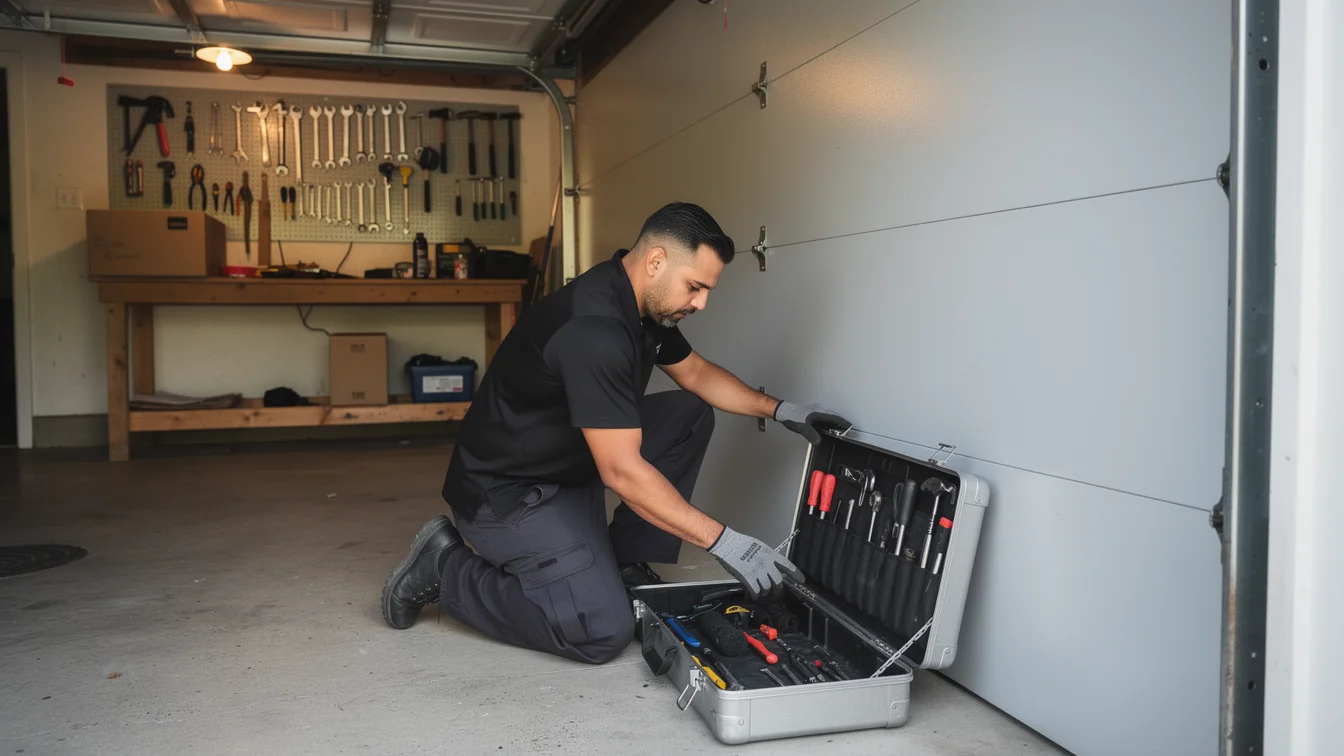
Before a tech touches a wrench, the first ten minutes are about the door itself, not the complaint you called in with. Most homes in this part of the county went up between 1955 and 2004, with the bulk of that stock dating to the 1960s and 70s across the 61 named areas we see work in. That range matters because a door installed in 1968 and a door installed in 1998 use different spring systems, different track gauges, and different opener mounts entirely. A tech checks the door's age range by eyeballing the track style and spring type before opening a panel. On an older torsion setup, that means checking the winding cone and the center bracket for wear nobody can see from inside the garage. On a newer extension-spring door, the look-over is faster but the opener's safety sensors get more attention, since those systems came standard later in that build window. Either way, the call starts with identifying what generation of door you've got, because ordering the wrong spring size or the wrong track radius means a second trip and a second wait.
The Problem
The actual complaint - a door that won't open, a spring that snapped, a track that's binding - almost always traces back to something tied to how long the door has been doing this job. A house built in the 1976 median year for this area has had roughly five decades of winding and unwinding on its torsion spring, and galvanized springs from that generation weren't rated for the cycle counts we expect out of doors today. So the "problem" a homeowner reports is usually the end of a slower failure: a cable that's been fraying for months, a roller that's worn its track groove wider than spec, a bottom bracket that's loosened one bolt at a time. The tech's job on the call is to find where in that chain the failure actually started, not just replace the part that finally gave out. One honest limit here: if the door's structural panel is rusted or the track is bent beyond straightening, we'll tell you that replacement beats repair, rather than patching a door that's going to fail again in a year. That's not a sales pitch, it's a judgment call based on what we see under the panel.
How Local Conditions Play In
This area sits in a cold, moderate climate band, and that shapes two things on every winter call: lubrication and spring tension. Steel contracts in low temperatures, which tightens torsion spring coils slightly and changes how much force the door needs to lift - a door that balances fine in July can feel heavy or uneven in January. A proper service call checks balance in the conditions the door actually operates in, not just on a mild afternoon. Cold also thickens old grease on rollers and hinges, which is why a door that's merely slow to open in winter sometimes gets misdiagnosed as a dying opener motor when it's really just friction. On the 1960s and 70s stock that makes up most of the housing here, original hardware often wasn't built with cold-weather-rated lubricant in mind, so a call on an older door usually includes relubing with something that won't gum up again at low temperatures. None of this is dramatic weather talk - it's just what cold does to steel and grease, consistently, every winter, on doors that have already been through forty or fifty of them.
What It Costs
We're not going to put a number here that doesn't hold up, because cost on a garage door call depends on what's actually wrong and what generation of door you have, and those two things vary house to house even on the same street. What drives the cost is usually three things: the part itself (a torsion spring sized for an older door can be harder to source than a common modern size), the labor time (a two-spring job on a double door takes longer than a single), and whether the opener needs attention at the same time as the door hardware. A straightforward spring swap on a well-maintained door is a different job than one where the tech also has to true a bent track or replace rollers that have worn unevenly. What we can tell you plainly: we quote the job after the tech has looked at the actual door, not over the phone off a description, because a guess made without seeing the hardware is a guess that's usually wrong in one direction or the other.
Frequently asked questions
Will a service call fix my door the same day?
Most diagnosis and common repairs - springs, cables, rollers, sensor alignment - get handled in the same visit once the tech has looked at the door. If a part specific to an older torsion setup needs to be sourced, that can add time, which the tech will tell you on site before starting the job.
Does cold weather actually affect how my door balances?
Yes. Steel coils tighten slightly in low temperatures, which changes how much force a torsion spring puts out. A door that lifts evenly in summer can feel heavier or uneven in winter, which is why balance gets checked under actual conditions, not assumed from a warm-weather baseline.
My house was built in the 1970s - does that change the repair?
It can. A lot of the housing stock here dates to the 1960s and 70s, and doors from that era often run torsion or extension spring hardware sized differently than what's common today. The tech identifies the track and spring style first so the right part gets ordered, not a generic modern size.
Is it ever cheaper to replace the whole door instead of repairing it?
Sometimes. If the panel is rusted through or the track is bent past straightening, repair just delays the same failure. We'll say so directly if that's what we find, rather than patching a door that won't hold up another winter.
Related garage door services in New Lenox
More garage door guides
Book garage door service in New Lenox
Call now or request a quote - tell us what the door is doing and where you are.