
New Lenox, IL · Garage Door Service
What Roller Wear Looks Like on Shorewood's Newer Housing Stock
Shorewood homes mostly date after 2001, newer than the wider service area's 1976 median build year, which changes how garage door rollers wear and fail here.
- Repairs & new doors
- Springs & openers
- Serving 6 nearby communities
What Causes It Around Here
Most of New Lenox Garage Door Pros' service area is older than you'd guess, with houses built mostly in the 1960s and 70s and a median year of 1976 across the territory. Shorewood breaks that pattern. The typical house here dates closer to 2001, a full generation newer than what we run into on most calls. That gap matters because it changes which roller is on your door in the first place.
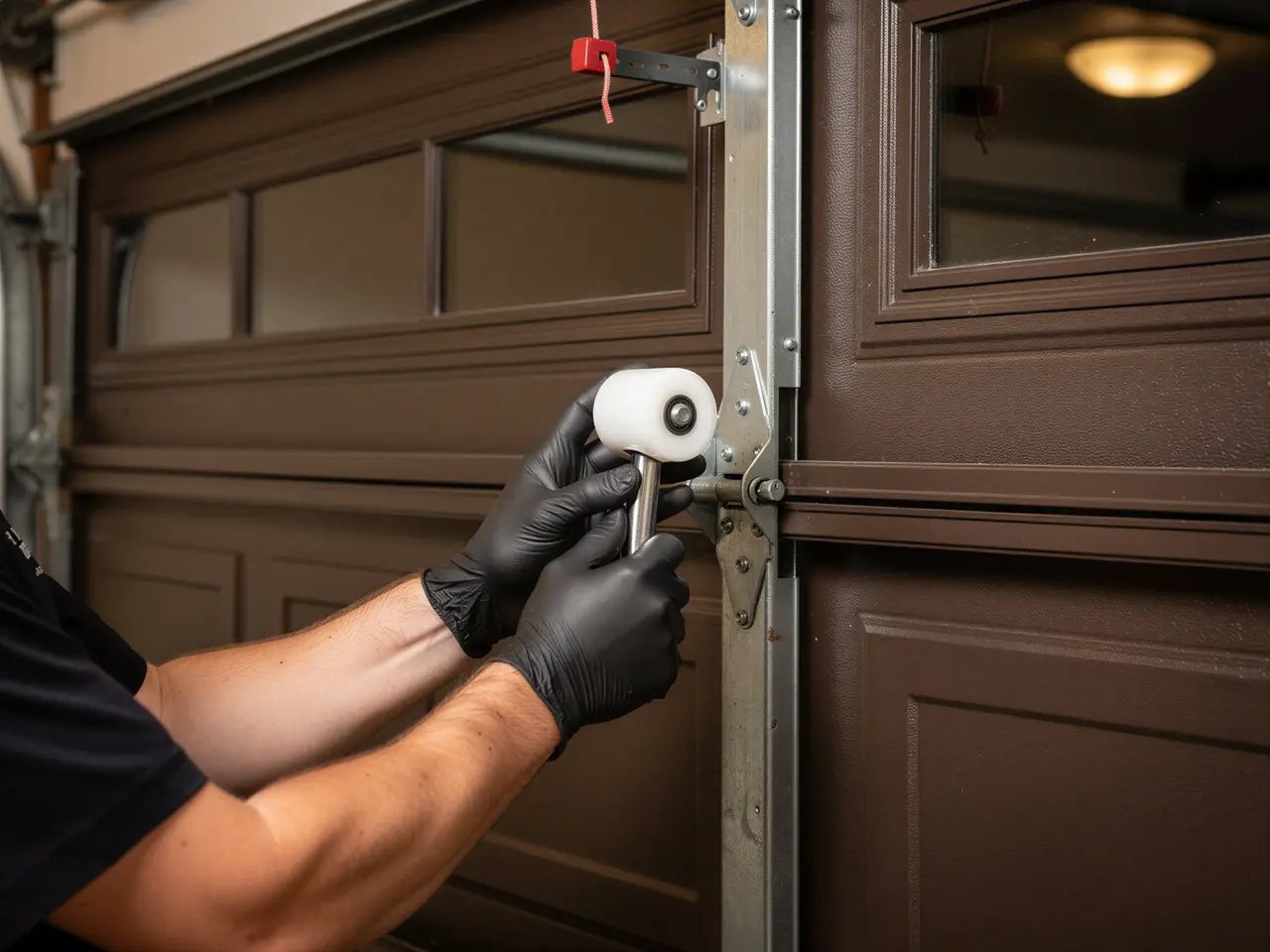
A 1976-built garage almost always started with steel rollers on plain bearings, bolted to track hardware that's been replaced piecemeal over the decades. A 2001-built garage in Shorewood more likely shipped with factory nylon rollers on sealed bearings, running on track that's never been swapped. That hardware lasts longer, but it isn't immortal - two decades of cold-season cycling still dries out the bearing grease and flattens the nylon where it rides the track, especially on the door you use every day.
The cold matters here too. This area sits in a moderate-cold climate band, and the freeze-thaw swing each winter is what finally cracks a nylon roller that looked fine in October. By the time you hear the grinding, the roller's usually been flat-spotted for a season already.
Booking a Visit
We run out of New Lenox, and Shorewood is about 13 miles down the road from there - not around the corner, but a normal stop on the route, not a special trip. There's no branch office or satellite crew based in Shorewood itself; every job here is a truck coming from New Lenox, same as it would be for a lot of the towns we cover.
What that means practically: we're not going to pretend we can swing by in ten minutes because you're close, and we're not going to pretend we can't get to you because you're far. Thirteen miles is a workable distance for a scheduled roller job, and we'd rather tell you that plainly than oversell how fast we move.
When you call, it helps to know which panel sticks or grinds, whether the door is single or double, and roughly how old the house is - in a town where build years range widely around that 2001 median, that one detail alone tells us a lot about what hardware we're likely to find before the truck ever leaves.
How Long It Takes
A straight roller replacement on one door - pull the old rollers, fit new ones, check the track alignment - is a short job by garage door standards. It's not a multi-hour tear-down like a full spring and cable job, because the door comes off balance for only a few minutes at a time, one roller at a time, with the spring tension never fully released.
What stretches the job is the track. On a 2001-era door, the horizontal and vertical track is usually original, and if it's bent, rusted at the radius, or set slightly out of plumb, the new rollers won't ride clean no matter how good they are. That's a separate fix, and it's the difference between a quick swap and a job that runs long.
We size up the track before we quote the time, not after. If it looks original and square, this is a job we plan to finish in one visit, same trip. If the track's been fighting the rollers for years, we'll say so before we start, not partway through.
Can You Do This Yourself
Rollers are one of the few garage door parts a careful homeowner can actually swap without touching spring tension, since you're working on an unloaded section of track, not the torsion system. If you've got the right roller size, a couple of pliers, and patience, replacing a worn roller on a section that isn't under load is a reasonable DIY job.
Where it goes wrong is matching the roller to the stem length and the track gauge. Nylon rollers on 2001-era doors often use a different stem length than the steel rollers sold at most hardware counters, and a mismatched stem lets the roller walk out of the track under load - which is worse than the worn roller you started with.
The honest limit: if more than one or two rollers are bad, or if the track shows any bend at the curve, that's past a one-afternoon fix. Pulling a full roller set while keeping the door square on bent track is where we see the most damage done by well-meaning owners, and it's the point where it's worth having someone look at the whole track, not just the rollers.
What the Fix Involves
We start by running the door through a full cycle to see exactly where it binds, then check each roller stem for play and each track section for straightness - on a 2001-built house, we're usually looking at original track, so square and alignment matter as much as the rollers themselves.
Bad rollers come out one at a time with the door supported, never with spring tension released, so the door stays controllable the whole time. We match stem length to what's actually in the track rather than assuming a standard size, since mismatched stems are the most common reason a roller swap doesn't hold.
Given the cold-moderate winters this area gets, we use rollers rated for that swing rather than a generic bargain part, because the failure we're called back for most often is a roller that was fine in warm weather and flat-spotted by the first hard freeze. Once the new rollers are in, we re-check track alignment and door balance before calling it done - a roller job that leaves the door out of balance just moves the next failure to the opener instead.
Where This Job Goes Sideways
The complication we run into most in Shorewood is track that looks fine but isn't quite square - common on houses from the early 2000s where the original installer set the vertical track slightly off plumb and it's held for two decades without anyone noticing, until new rollers finally expose it by binding where the old flat-spotted ones didn't.
The other one: opener sensitivity. Newer openers, which match this area's newer housing stock, read a rough-riding roller as resistance and start reversing the door mid-cycle. Swap the roller and the symptom disappears, but if you'd skipped the roller and just adjusted the opener's force settings instead, you'd have masked a hardware problem instead of fixing it.
One limitation worth saying outright: if the track itself is bent at the radius, not just misaligned, a roller swap won't hold the fix for long. That's a track replacement, not a roller job, and we'd rather tell you that up front than sell you new rollers that fight bad track for another winter.
Frequently asked questions
Why would a newer house in Shorewood have roller problems at all?
Age isn't the only driver. Shorewood's housing runs newer than most of the service area, built mostly after 2001, but factory nylon rollers still wear from winter temperature swings and daily use. A 20-year-old roller on a 20-year-old house is well within normal wear, even though the hardware generation differs from older towns nearby.
Do you have a shop or crew based in Shorewood?
No. We're based in New Lenox, about 13 miles from Shorewood, and every job here is a scheduled truck trip from there. We don't claim a local branch or a faster response time just because the distance is short - it's a normal stop on the route, planned like any other.
Will my rollers match a door bought off the shelf at a hardware store?
Not always. Doors built around 2001, common in Shorewood, often use nylon rollers with a stem length that doesn't match generic hardware-store steel rollers. Mismatched stems let the roller walk off the track under load. We match stem and gauge to what's actually installed before swapping anything.
More garage door services in Shorewood
Book garage door service in New Lenox
Call now or request a quote - tell us what the door is doing and where you are.